

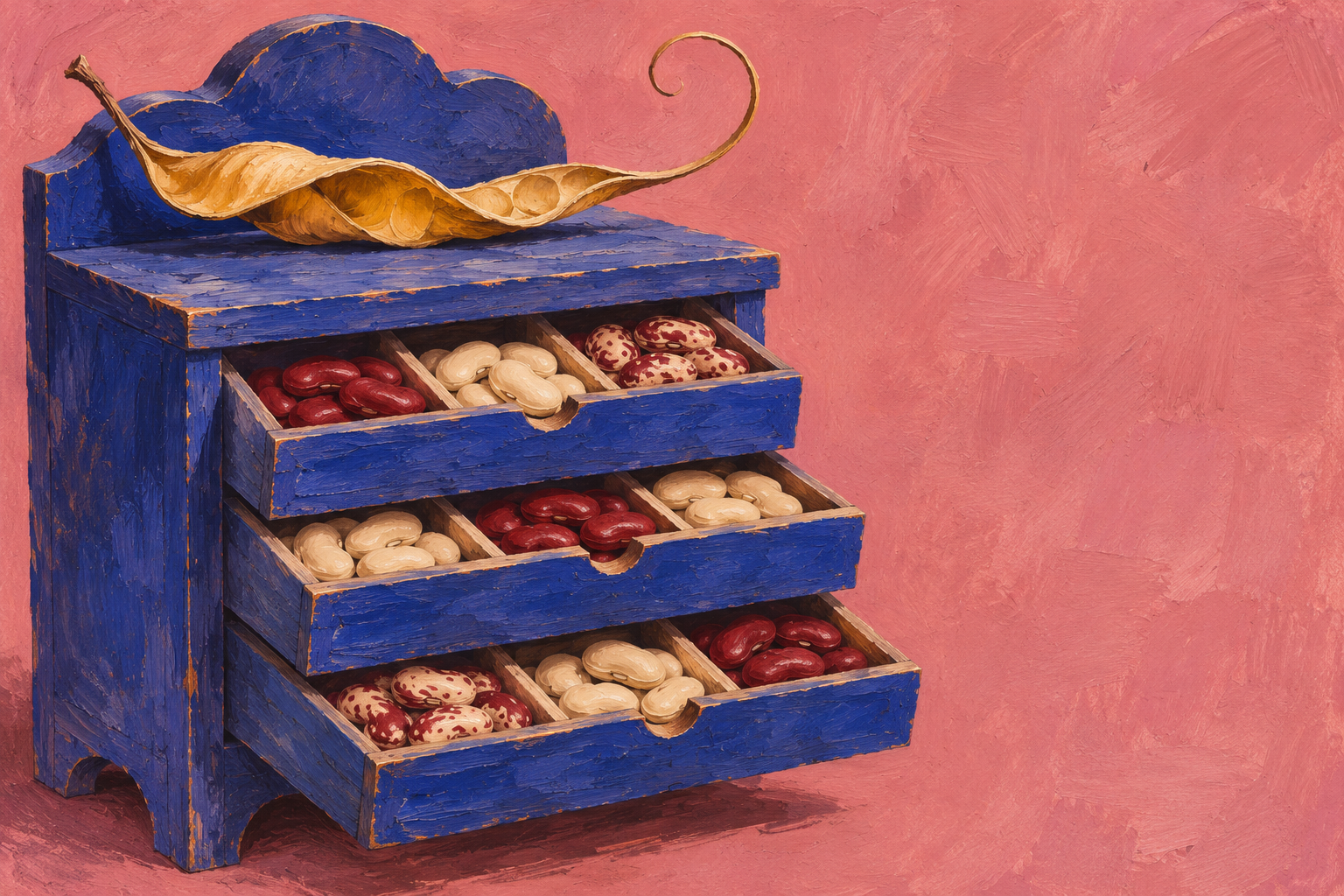
An imagined blue seed cabinet holds the beginnings of another growing season. Original AI-generated editorial painting.
Clear labels and practical care help a small community collection become a useful place to grow and learn
By Arbab Naseebullah Kasi, Chief Executive Officer - CEO, Feel Worldwide Foundation Inc.
A packet of seeds can look like a complete gift. It fits in a hand, costs little to carry and contains the possibility of something useful. But the person receiving it may need answers that the packet does not provide. What is this variety? When was the seed collected? Does the plant need a climbing support? Is it suitable for the space available?
A community seed library becomes more useful when those questions travel with the seeds. Its contribution can be modest and worthwhile: helping someone try a vegetable, learn from a neighbour or keep growing a variety they value. That takes attention to the ordinary details behind the generous gesture.
Consider this illustrative example, not a reported event. A volunteer places two envelopes of beans in a community centre. One says only “beans.” The other names the variety, identifies the harvest year, explains that the plants climb and records that the seeds came from a local garden. The second envelope gives the next grower a better starting point. It also leaves room to say what is still unknown.
That is a practical way to begin a seed library: make the next person's decision easier.
Decide what the collection is for
A seed library for household gardeners may offer small packets and opportunities to learn. A community seed bank serving farmers may have wider responsibilities for conserving varieties, managing supplies and supporting future planting. These purposes can overlap, but a small public collection should be careful about the promises it makes.
The Food and Agriculture Organization's community seed bank guide treats local knowledge, crop diversity and the organisation of seed management as connected parts of the work. Its approach is useful context for a community group, rather than evidence that every seed-sharing shelf is already performing the functions of a conservation programme. FAO community seed bank guide
Choose a purpose you can support through a full growing season. Perhaps the first collection will help beginners try a few suitable vegetables, with advice from experienced growers. Perhaps an established group wants to document and maintain particular varieties. The second goal requires more technical planning than distributing surplus packets.
Ask who will use the collection and what they can realistically grow. Someone with a sunny balcony may need different options from someone with a large plot. A packet is more useful when the growing requirements fit the person receiving it.
Let beginners take part without taking on a debt
The word “library” can suggest that everything borrowed must be returned. Seed sharing needs its own clear explanation. A beginner may reasonably worry that a failed crop will leave them owing the collection something they cannot provide.
Longwood Public Library in New York offers a useful example. Its published seed-library guidelines do not require people to return seeds. They also distinguish donated home-saved seeds from commercially sourced seeds because saved material may differ from its label. These are that library's policies, not universal rules or a guarantee about any particular packet. Longwood Grows Seed Library
A community group can explain its own arrangement just as plainly. Say whether seeds are free, how much someone may take and whether contributions are optional. If returning seed is part of the arrangement, explain the quality requirements before people begin growing.
There should be other ways to contribute. Someone might help prepare envelopes, translate instructions, keep records or share a growing observation. Participation should remain possible for people who are learning, who have limited space or whose first attempt does not succeed.
Choose a manageable starting collection
There is a temptation to accept every donation and celebrate the number of varieties on the shelf. A smaller collection with reliable information may serve people better.
The University of Minnesota Extension identifies tomatoes, peppers, beans and peas as useful choices for beginning seed saving because of their self-pollinating flowers. It also explains that open-pollinated varieties can produce offspring similar to their parents when pollination is appropriately managed. Seeds saved from hybrid plants may grow, but the next generation will not necessarily preserve the parent's characteristics. University of Minnesota guidance on saving vegetable seeds
Use that distinction carefully. “Open-pollinated” does not mean that a seed can never cross with another variety. “Hybrid” does not mean worthless, dangerous or incapable of producing seed. These terms help growers understand what to expect.
For a first season, seek local horticultural advice on a few crops suited to the climate and available growing spaces. Keep seed saving that requires more complicated pollination management with people who have the knowledge to do it. Beginners can still enjoy growing those crops without being asked to supply the next generation of seed.
Make the label useful and honest
Treat the label as part of the donation. A beautiful envelope with a confident name cannot replace a reliable record.
A practical intake record might include the crop and variety, whether the seed is commercially packaged or home-saved, the year harvested or the original packet date, and the general area where it was grown. Record any known uncertainty about identity or pollination. Give each batch a simple reference so information does not become separated when it is divided into smaller packets.
University of California guidance recommends labeling seed with the plant type and variety, with useful notes such as harvest timing, seed source and measures taken to limit cross-pollination. UC Master Gardeners seed-saving guidance
Returning to the illustrative bean example, the volunteer should not guess a variety name to fill an empty field. Nor should “grown locally” become a claim that the seed is disease-free or especially drought-tolerant. Record what the donor knows and label uncertainty clearly. If identity cannot be established well enough for responsible distribution, keep the packet out of the public collection while seeking advice.
A general growing area can be helpful without publishing a donor's home address. Ask permission before attaching someone's name, personal story or contact details to a packet or online catalogue.
Give storage and checking a named owner
The display is only one part of the collection. Someone needs to check incoming material, maintain records and look after seed between planting seasons.
For commonly saved vegetable seeds, Utah State University Extension explains that temperature and humidity affect storage quality. It recommends clean, dry seed and suitable sealed containers, and describes a germination test for checking stored seed. Storage methods should fit the crop and local conditions rather than follow a decorative display idea. Utah State University guidance on collecting and storing seeds
Agree on a receiving process before inviting donations. Who checks the information? Where does material wait before acceptance? Who decides that a batch should not be distributed? Seek qualified advice about suspect seed rather than assuming that a quick visual inspection can establish plant health.
If you run a germination check, record the date, method, number tested and result. A small check provides information about that sample under those conditions. It does not promise that every seed will grow in someone else's garden, identify the variety or certify freedom from disease.
Plan the routine work so it does not depend on one volunteer remembering everything. Another person should be able to understand the records and continue the care of the collection.
Keep growing knowledge close to the packet
The most useful information may come from someone who has grown the plant nearby. They may know that it needs a strong support, that the harvest takes patience or that a particular planting time worked well in their garden.
Offer a simple way to record these observations, with permission. Separate a grower's experience from a general recommendation. “Harvested well in a sheltered plot last season” is a more honest note than “guaranteed high yield.” Invite people to record disappointing results too, including conditions that may have contributed.
Short demonstrations can make the collection easier to use. An experienced grower might show how they keep batches separate or explain how saving seed changes the timing of a harvest. The session should make room for basic questions without embarrassment.
Do not assume everyone can read a dense instruction sheet or attend an evening meeting. Clear print, accessible digital information, suitable languages and a conversation at collection time can all help. Choose the support you can maintain, and tell people where to find further local advice.
Take conservation claims seriously
A drawer containing many packets looks diverse. Maintaining the diversity within a variety is a more demanding task.
Organic Seed Alliance's seed-saving guide explains why the number of plants contributing seed matters for retaining genetic variation. It provides crop-specific guidance and discusses isolation as a way to manage unwanted crossing. These requirements differ by crop and purpose. Saving a handful of seeds from one plant is not automatically a conservation programme. Organic Seed Alliance seed-saving guide
If conserving a valued variety is the goal, work with experienced seed stewards or an appropriate agricultural organisation. Agree on the number of plants, pollination management, recordkeeping and arrangements for growing fresh seed in later seasons. Check what the contributing community wants to preserve and how it wants to participate.
Respect the people behind the variety as well as the material itself. Access to a packet should not be treated as permission to turn a family's knowledge or a community's heritage into a promotional story. Ask before recording or sharing that knowledge, and agree on attribution and use.
Check the rules before widening the exchange
Keeping an initiative small does not remove the need to check applicable seed, plant-health and distribution requirements. Ask the relevant agricultural authority what applies to your location and proposed activity before you begin accepting and sharing material.
International exchange needs particular care. In the United States, USDA APHIS explains that imported plants and seeds must meet import requirements, with permits, exemptions or other conditions depending on the material. A friendly exchange should not be assumed to be unrestricted simply because no money changes hands. USDA APHIS guidance on importing plants and seeds
For a new group, a sensible first step is to work with known local sources while getting appropriate advice. Avoid making promises about shipping, importing or distributing unfamiliar material before those checks are complete.
Start with one season you can learn from
A useful first-season plan does not need a grand launch. It needs a clear purpose, suitable seed, understandable labels and people with time to care for the collection.
Begin with a short list of crops and a written explanation of how participation works. Invite a knowledgeable local grower or extension adviser to help review the plan. Assign responsibility for intake and storage. Set a time to ask participants what grew, what confused them and what support would have helped.
Count more than packets taken. Notice whether people understood what they were growing, whether the instructions matched their circumstances and whether the collection remained manageable. A small service that learns from its first season is in a better position to decide what should grow next.
There is something warmly human about passing on a seed. Someone has cared for what came before and is making room for what might follow. Good labels and thoughtful stewardship let that generosity reach the next person with fewer guesses and more confidence.
Which piece of growing knowledge would make the next packet of seeds you share more useful?
