
Why U.S. Investors Should Look at Balochistan Now: The Reko Diq Moment and the Province-Scale Opportunity Behind It
A decision-maker grade, investor-focused guide to Balochistan’s metals, industrial minerals, energy corridors, and community-first value creation that can become a win for the United States, Balochistan, and Pakistan.
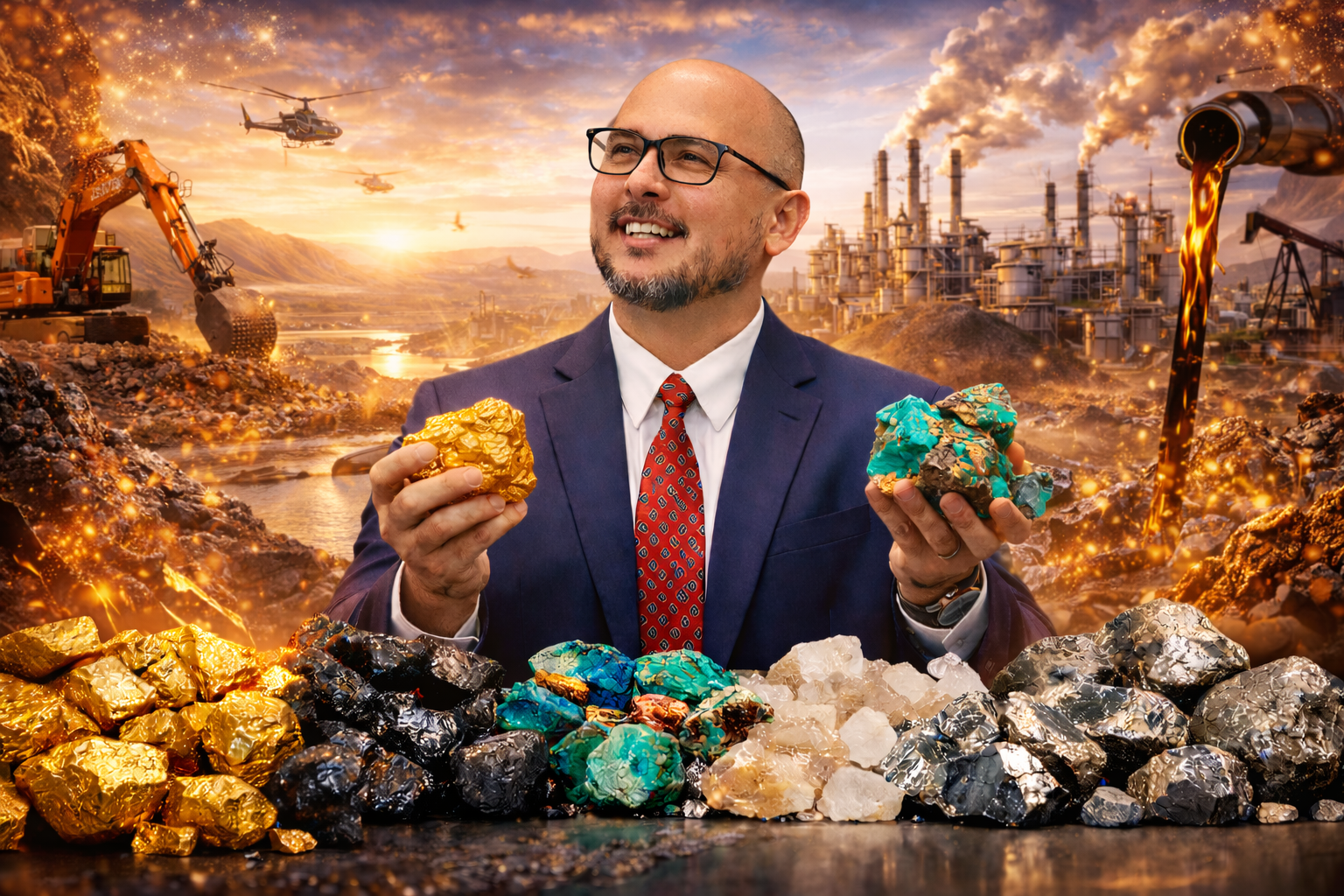
I am inviting serious U.S. and global investors to build Balochistan as a corridor platform, where world-class resources become reliable trade, real jobs, and durable prosperity.
Balochistan’s Natural Resources Are a Once-in-a-Generation Investment Platform for U.S. and Global Investors
I am inviting you into a corridor-scale opportunity anchored by Reko Diq and multiplied by industrial minerals, energy, logistics, and community-first programs that can make this a win for the United States, a win for Balochistan, and a win for Pakistan.
Let me speak to you plainly before we talk numbers
If you are a U.S. investor, or a global investor who thinks like one, you already understand what the next decade is going to demand: massive electrification, relentless infrastructure buildout, reindustrialization, and supply chains that can survive shocks. Copper is not optional in that future. Neither are the industrial minerals that make housing, roads, ports, and power systems possible at scale. And what investors often miss is this: the greatest returns rarely come from a single asset. They come from building a system around an anchor.
That is exactly what Balochistan offers.
I am not asking you to “take a risk on a place.” I am inviting you to build a corridor-scale platform that can be engineered for profitability, governed for credibility, and designed so communities visibly benefit from day one. When you do it that way, you do not just extract value. You manufacture stability. And stability protects returns.
The core idea in one sentence
The smartest way to invest in Balochistan is to treat it as an integrated corridor system, anchored by world-scale copper and gold, expanded through industrial minerals and processing, powered by modern energy, and stabilized through measurable community prosperity.
Reko Diq is the anchor that can pull an entire province forward
Let’s start where the world is already paying attention.
Reko Diq is a mega-scale copper and gold project in Chagai District, and the scale is not a marketing claim. The publicly reported indicators include a total mineral resource of about 5.9 billion tonnes, with reported recoverable metals around 50 million tonnes of copper and about 42 million ounces of gold. The reported grade ranges are roughly 0.41% to 0.53% copper and about 0.22 g/t to 0.30 g/t gold. In early phases, it is often described at an operating scale of around 200,000 tonnes of copper per year and around 250,000 ounces of gold per year.
Now look at what independent, global reporting has said about the economics. Reuters reported Barrick’s CEO stating that Reko Diq could generate about $74 billion in free cash flow over 37 years, with production expected to begin by late 2028, phase-one capex reported around $5.5 billion, and a phase-two expansion reported around $3.5 billion that could double copper output.
And here is the part I want you to notice as an investor: this is no longer a “maybe someday” story. The U.S. Embassy in Pakistan publicly announced $1.25 billion in financing connected to minerals mining and explicitly framed Reko Diq as a model that benefits U.S. exporters alongside local Pakistani communities and partners.
That combination, a world-class orebody, a long-life cash flow narrative, and visible geopolitical-financing interest, is exactly how a region becomes investable at scale.
Saindak proves the operating reality, and shows where upgrades create value
Great investors do not only study geology. They study execution.
Saindak, also in Chagai, is proof that large-scale mining and metallurgical output can operate in this belt. Reported figures include reserves originally cited around 412 million tonnes and draft-reported annual production around 20,000 tonnes per year of blister copper, about 1.5 tonnes per year of gold, and about 2.5 tonnes per year of silver, with a North Ore Body reported as being developed to extend mine life beyond 2030.
Why does this matter for you? Because it shows the “upgrade surface area.” The value is not only in ore. The value is in modern recovery optimization, transparent reporting, stronger supplier linkages, safer operations, better labs, better maintenance systems, and better logistics. Those are areas where U.S. and allied capital, equipment, services, and standards can create immediate uplift.
The corridor map is the real opportunity, not one project
I want you to see Balochistan the way serious resource investors see Western Australia or Chile: through corridors that can host clusters of profitable businesses.
There is a Chagai metals corridor anchored by copper and gold. There is a Northern ophiolite corridor where chromite and ultramafic-associated minerals can scale when grading, traceability, and beneficiation hubs are built. And there is a Khuzdar–Lasbela base-metals corridor that can support export concentrates and industrial mineral processing when infrastructure and compliance are designed upfront.
That corridor thinking changes everything. Because you stop asking, “Which single mine is best?” and you start building the stack: extraction, processing, labs, logistics hubs, workforce academies, safety systems, and manufacturing near raw materials. That is how you turn geological endowment into durable cash flow.
Copper and gold are the headline, but iron ore is the industrial backbone
If you care about Pakistan’s industrial capacity and the long-term domestic demand curve that supports resilient projects, iron ore matters.
Dilband is described as a large iron ore deposit with reported reserves around 200 million tonnes and a reported grade of about 35% to 40% Fe hematite, with the practical point that higher silica complicates processing but beneficiation pathways exist when power and logistics are planned correctly.
That is the investment logic right there: iron ore becomes bankable when the processing route is proven, concentrate quality is demonstrated, and bulk transport is engineered. Investors who understand industrial platforms will recognize what this enables: pelletizing or sinter feed pathways, lime and flux integration, and long-run construction demand support.
Chromite is a value chain story hiding in plain sight
Chromite is not only a mineral. It is a governance and value-capture test.
In Muslim Bagh, the chromite belt is described with proven reserves around 2.0 million tonnes, with reported high metallurgical grade quality, Cr2O3 greater than 48%, and a Cr:Fe ratio around 3:1.
Here is the truth I want you to absorb: most value leakage in chromite happens at the trading stage, not the mining stage. When you introduce standardized grading, transparent pricing, selective beneficiation, and traceability, you can lift provincial value capture, reduce illicit flows, and create a cleaner story for ESG-sensitive capital. That is a rare combination: higher returns and lower reputational risk, achieved through systems.
Lead and zinc are already operating, and they point to scalable midstream opportunities
Duddar is described as an operational underground mine, with reported reserve and grade indicators including about 50 million tonnes of reserves, zinc above 10% and lead above 3%, and production of 100,000+ tonnes of concentrate annually.
This is where disciplined investors see the obvious next layer: concentrate quality control, impurity management, tailings systems that meet international standards, and reliable offtake. These are precisely the areas where U.S. technical capability, compliance culture, and structured finance can transform a “mine” into an investable supply node.
Gypsum is the quiet giant, and the numbers are staggering
Now let me show you a set of numbers that should stop you in your tracks, because they are not about a single mine. They are about industrial transformation.
Reported district-scale gypsum endowment figures include approximately 0.8 billion tonnes in Chagai, 0.5 billion tonnes in Kharan, 0.4 billion tonnes in Awaran, 0.2 billion tonnes in Khuzdar, 0.2 billion tonnes in Kohlu, 0.18 billion tonnes in Loralai, 0.16 billion tonnes in Kalat, 0.15 billion tonnes in Mastung, 0.1 billion tonnes in Barkhan, 0.05 billion tonnes in Lasbela, and 0.01 billion tonnes in Sibi.
When you see gypsum at that scale, the investment thesis becomes manufacturing, not quarrying. Gypsum board plants, plaster and finishing materials, cement supply optimization, logistics siting, certified lab testing, and quality blending become the profit centers. And because gypsum is bulky, proximity wins. That means multiple districts can host localized manufacturing, which means jobs spread across communities, which means better stability, which means lower risk.
This is how a “mineral” becomes a national housing lever, an infrastructure lever, and a returns lever at the same time.
Limestone, barite, fluorite, magnesite, sulphur, and the industrial mineral ladder
Industrial minerals are where patient investors often get paid without the headline volatility, because demand is structural and tied to construction, chemicals, and manufacturing.
Limestone for cement and lime is described across multiple districts with active quarrying, and the investment logic is straightforward: standardized quality mapping, CaCO3 and burnability control, and plant integration with power and transport.
Barite is positioned as a corridor opportunity in Khuzdar, and if you have ever financed energy supply chains you know why that matters: barite’s drilling use rewards certification, specific gravity compliance, processing and grinding capacity, storage, and stable contracts. The real money is made in certified processing hubs that meet international specs consistently.
Fluorite, magnesite, and sulphur are described as emerging opportunities that become real when grade verification, pilot processing, and feasibility work are executed under strong HSE. These are exactly the commodities where investors who build labs, pilot plants, and disciplined data rooms can create first-mover advantage without rushing into premature capex.
And when you add clays, silica and quartz, feldspar, and related minerals that feed ceramics, tiles, glass, fillers, paints, and plastics, you begin to see the real blueprint: build materials manufacturing close to raw materials, powered by reliable energy, protected by modern environmental controls, and connected to ports and domestic markets.
Coal, gas, and the truth that energy is the hidden ore body
No serious resource investment platform succeeds without energy discipline. Energy is not a side category in Balochistan. It is the enabling layer.
Reported coal figures include about 23 million tonnes in Mach, about 39.44 million tonnes in Sor Range, about 15.08 million tonnes in Sinjidi–Degari, and a large reported scale in the Chamalang–Lunda–Nosham belt, with a repeated emphasis that safety modernization is non-negotiable.
This is where I speak as someone who cares about lives, not only margins. Coal becomes investable only when safety becomes the operating system, with ventilation, monitoring, rescue readiness, training, and enforcement that is real, measurable, and transparent. When you modernize coal safety and productivity together, you lower fatalities, increase reliability, and you stabilize the workforce that every industry depends on.
On natural gas, key systems include the Sui gas system in Dera Bugti and the Uch gas and power corridor in the Nasirabad corridor, both positioned as strategic for industrial fuel and power generation when governance, reliability, and community trust are treated as core infrastructure.
And I want to be clear about the modern energy pathway: it is not one fuel. It is an integrated energy-to-mines strategy that uses grid strengthening where feasible, gas-to-power where it makes sense, and renewables plus storage where remote operations need resilient, lower-cost electricity. That is how you cut operating costs, reduce emissions intensity, and improve community outcomes at the same time.
The fastest job engine many investors overlook is stone, and it scales with better methods
Balochistan’s dimension stone, especially onyx, is not a small story when you treat it professionally. It is one of the fastest pathways to SME-driven growth because it creates employment through quarrying, cutting, finishing, logistics, and export marketing.
What changes the economics is block recovery. When quarrying is modernized, waste drops, saleable blocks increase, quality consistency improves, and the same deposit becomes far more profitable. This is a perfect entry point for investors who want distributed, community-visible prosperity, because a stone cluster can be scaled district by district with power, training, safety standards, modern cutting equipment, and export compliance systems.
Gwadar and coastal logistics turn resources into global trade
If you want this to be a win for the United States, you must think in terms of trade architecture, not just extraction.
Ports, storage, certified labs, customs compliance, bonded zones, and reliable transport corridors convert minerals and industrial products into globally bankable flows. Gwadar and the coastal corridor represent that conversion potential, particularly when you pair logistics with processing zones and community-first development that makes stability visible on the ground.
What makes this a win for the United States
Let me say it directly. U.S. investors win here in three ways.
You win by participating in a world-class copper and gold supply story that aligns with electrification and infrastructure demand. You win by building midstream and processing capacity where U.S. equipment, services, compliance culture, and high standards create competitive advantage. And you win by helping shape a standards-based investment model that strengthens U.S. trade, supports U.S. exporters, and builds durable partnerships.
The public signals are already there. Reuters has reported the magnitude of the projected free cash flow and the phased production profile. The U.S. Embassy in Pakistan has publicly described financing tied to minerals mining and framed Reko Diq as a model that benefits U.S. exporters and local communities.
That is not hype. That is alignment.
What makes this a win for Balochistan and Pakistan, and why that protects your returns
If communities do not benefit, projects do not stay stable. And if projects do not stay stable, returns become fragile.
That is why the investment model I am advocating is simple and strict: build measurable local prosperity into the operating system. That means skills academies for local youth, structured local procurement, SME development, and transparent systems that turn “benefit sharing” into something people can see, touch, and trust.
When you do this, you are not “being nice.” You are reducing risk. You are reducing friction. You are reducing the security premium. You are creating a workforce that stays. You are building a supplier base that grows. And you are strengthening Pakistan’s economy in a way that benefits everyone who depends on predictable trade and stable regional partnerships.
The biggest investor mistakes I do not want you to make
The first mistake is confusing resource size with bankability. Big numbers are the beginning, not the decision. Bankability requires verified reserves under modern standards, credible metallurgy, water planning, power planning, tailings engineering, and a transparent pathway to permits and royalties.
The second mistake is underinvesting in data integrity. The fastest way to de-risk Balochistan is not another speech. It is a provincial-grade data room culture: certified labs, independent verification, clean chain-of-custody, and decision-useful reporting that makes lenders comfortable and partners confident.
The third mistake is treating safety as a cost instead of a multiplier. In coal and in mining generally, safety is the foundation of reliability. Reliability is the foundation of cash flow. If you want long-life projects, you must invest in HSE like you invest in extraction.
The practical plan I want you to start with, starting now
If you are serious, I want you to start by thinking like a platform builder.
Begin with the enabling layer that every corridor needs: certified labs, QA and metallurgy testing, safety systems, maintenance ecosystems, logistics hubs, water recycling and industrial water planning, and power solutions designed for mining and manufacturing. Then scale into processing and manufacturing where demand is structural, gypsum board and plaster, cement and lime integration, barite certification and grinding, stone finishing clusters, and base-metal concentrate optimization. Then, and only then, expand capital into larger extraction and downstream pathways as verified data and stable systems compound your advantage.
This is how disciplined investors enter frontier upside without behaving like gamblers.
Where Feel Worldwide Foundation Inc. fits, and why it makes the entire platform stronger
I want you to know that I am not only talking about capital. I am talking about an ecosystem.
My foundation, Feel Worldwide Foundation Inc., will be available to share more ideas and thoughts, and to help co-design the kind of programs and community-based initiatives that make projects healthier, safer, and more investable. That includes workforce pipelines, entrepreneurship and SME acceleration, women’s participation pathways where communities want them, safety and skills training, community needs assessments, transparent impact reporting, and locally led development models that create dignity alongside growth.
When you pair serious investment with serious community architecture, you build something rare: a platform that can grow for decades.
My closing message to you, investor to investor
Balochistan is not a single deal. It is a province-scale opportunity to build a modern resource and manufacturing corridor that can feed global demand, strengthen Pakistan’s industrial backbone, and create visible prosperity in communities that deserve it.
Reko Diq is the anchor that the world recognizes, with Reuters reporting a projected $74 billion in free cash flow over 37 years and a late-2028 production target, and the U.S. Embassy publicly signaling financing tied to minerals mining while framing Reko Diq as a model for shared benefits. But the real win is what you build around that anchor: iron and chromite integrity, lead and zinc growth, gypsum manufacturing at astonishing scale across multiple districts, energy-to-mines systems, logistics corridors, and SME clusters that spread prosperity.
If you want to explore this seriously, I want to hear what you are most drawn to: the Reko Diq anchored corridor, gypsum and building materials manufacturing, base-metals processing, energy-to-mines platforms, or the high-employment stone economy.
