Balochistan’s Next Chapter
Balochistan’s Next Chapter
Why Peace, Partnership, Enterprise, and Ethical Investment Can Turn a Strategic Region into a Shared Prosperity Story for Pakistan and the United States
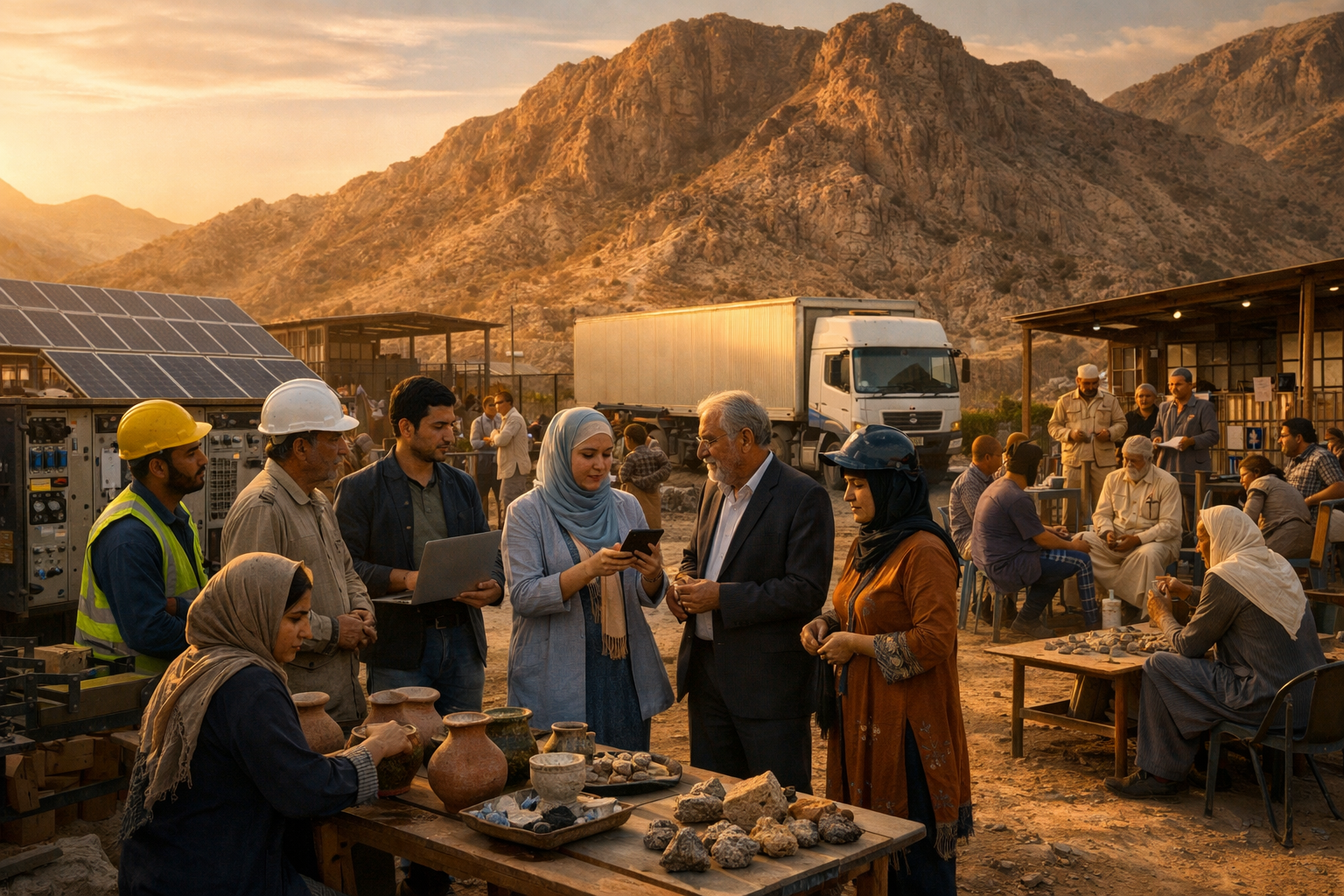
Balochistan’s future can be shaped by ethical investment, local enterprise, stronger institutions, and partnerships that turn opportunity into shared prosperity.
A New Way to See Balochistan
There are places in the world that are too often discussed only through the language of risk. Balochistan is one of them. For too long, many people have looked at it and seen only distance, difficulty, fragility, and conflict. But when I look at Balochistan, I also see something else. I see strategic geography. I see untapped human potential. I see entrepreneurs waiting for markets, communities waiting for opportunity, institutions waiting for stronger partnerships, and a region with the power to become one of the most important engines of ethical investment, local enterprise, supply chain resilience, and long term peace in Pakistan. The larger policy environment around Balochistan is increasingly concerned with protecting critical infrastructure, strengthening law enforcement capacity, improving coordination, and creating the conditions for sustainable self reliance because instability in the province threatens infrastructure, transport systems, commercial activity, and access to strategic mineral resources.
This is why Balochistan should not be understood as a problem to be managed. It should be understood as an opportunity to be developed with wisdom, patience, responsibility, and ambition. The future of Balochistan can be built through a model that connects safety with jobs, investment with inclusion, and U.S.-Pakistan partnership with visible local benefit. The most important opportunity is not simply to spend money in the region. It is to create a durable ecosystem where security, infrastructure, entrepreneurship, and community trust reinforce one another.
Why This Matters to Pakistan, the United States, and Local Communities
Balochistan matters because it sits at the intersection of economics, stability, logistics, strategic minerals, and future growth. It contains significant mineral potential and occupies a geographic position that can support trade, energy, transport, processing, and regional connectivity. The current policy focus on the province is explicitly tied to protecting critical infrastructure and securing conditions necessary for reliable commercial access to strategic minerals while reducing the impact of terrorist threats on infrastructure, transportation networks, and economic activity.
But the most powerful reason it matters is human. If Balochistan becomes more peaceful, more investable, and more economically connected, then families gain livelihoods, young people gain direction, businesses gain confidence, institutions gain legitimacy, and cross border partnerships become easier to sustain. When communities believe that roads, industrial zones, ports, transport routes, digital systems, and training centers are connected to their own prosperity, the social foundation for peace becomes stronger. When investors see credible local partnerships, better coordination, clearer risk management, and a real talent pipeline, they become more willing to commit. When Pakistan and the United States collaborate in ways that produce tangible local benefits, trust grows on both sides.
That is why the right question is not whether Balochistan has opportunity. The right question is how to design opportunity in a way that is ethical, locally rooted, commercially viable, and strong enough to outlast political cycles and short term programs.
The Real Entrepreneurial Opportunity Is Ecosystem Building
The most transformative opportunity in Balochistan is not a single company, a single mine, or a single training program. It is the creation of a complete economic ecosystem around security conscious, community centered development. That ecosystem can include supplier development, youth skilling, women’s entrepreneurship, logistics services, infrastructure resilience, digital mapping, business incubation, legal and compliance advisory, investment matchmaking, cross border trade facilitation, renewable energy solutions, transport services, hospitality, industrial support services, and local manufacturing tied to larger value chains.
This matters because large economic opportunities do not create inclusive prosperity automatically. They require systems. They require trained people, reliable vendors, trusted intermediaries, community engagement, transparent processes, and institutions that can work together. The strongest future for Balochistan will come from initiatives that connect local people and enterprises to major sectors rather than leaving them outside the gate.
That means the best opportunities are not only in extraction or infrastructure itself. They are also in the businesses that support them. These include safety equipment suppliers, transport contractors, catering and hospitality providers, technical training firms, translation and interpretation services, digital recordkeeping companies, warehousing operators, maintenance teams, fuel and fleet services, waste management enterprises, environmental monitoring support, community liaison units, women led service businesses, youth led digital startups, local construction support firms, emergency preparedness trainers, and small businesses that can feed into much larger industrial and commercial systems.
A Practical Vision for High Impact Initiatives
One of the most powerful initiatives would be the creation of a Balochistan Investment Readiness and Enterprise Acceleration Platform. This would not be a typical incubator. It would be a highly practical bridge between local entrepreneurs, diaspora investors, U.S. partners, Pakistani institutions, and commercial sectors that need reliable local vendors. The platform could identify promising businesses in logistics, transport, engineering support, solar energy, industrial safety, communications, warehousing, food services, digital documentation, construction inputs, and local procurement. It could then provide tailored support in business planning, registration, accounting, compliance, branding, contract readiness, and investor presentation.
Alongside that, a Supplier Development and Local Procurement Initiative could help local businesses become procurement ready for large commercial and infrastructure projects. Many communities do not benefit from major investments because local firms are not prepared to meet formal contracting standards. A supplier development initiative could provide training in invoicing, tax compliance, occupational safety, recordkeeping, tender response writing, quality standards, service delivery, and customer relationship management. It could also develop a verified directory of local vendors that larger companies and institutions could use with confidence.
Another high impact idea would be a Critical Infrastructure Community Partnership Program that links infrastructure protection with local opportunity. The policy environment driving interest in Balochistan emphasizes critical infrastructure resilience, better preparedness, and institutionalized practices. In entrepreneurial terms, this opens the door for locally delivered services such as emergency preparedness training, route risk awareness, communications support, digital monitoring systems, solar backup systems, protective site design consulting, transport contingency planning, and community based reporting channels that help reduce disruptions. Ethical business growth becomes much stronger when communities see themselves as stakeholders in continuity and resilience.
A Workforce to Enterprise Initiative would also be essential. Many young people in Balochistan need a pathway that starts with skills and leads to jobs, contracts, and eventually enterprise ownership. This initiative could create short course academies in welding, fabrication, solar installation, equipment maintenance, industrial electrical work, fleet support, construction supervision, digital mapping, warehouse operations, English for industry, business communication, bookkeeping, entrepreneurship, and leadership. The strongest version of this model would not stop at training. It would move trainees into apprenticeships, then into jobs, and then help top performers launch microenterprises or cooperatives that serve real market needs.
Turning Peace into an Economic Strategy
Peace should not be treated only as a political aspiration. In regions like Balochistan, peace can also be built as an economic strategy. When people see fair opportunity, when public institutions and local communities interact more constructively, when infrastructure produces visible local value, and when youth believe they can build a future through work and enterprise, the social climate changes.
One important family of initiatives would therefore focus on community trust and local inclusion in development corridors. These could include community consultation forums, district level listening sessions, village to market engagement platforms, local grievance response systems for commercial projects, youth civic leadership labs, and public dialogues that allow business, education, civil society, and local authorities to discuss opportunity and risk together. These are not side activities. They are foundation building activities. Without them, investment often feels external. With them, investment can become shared.
There is also room for a Women’s Enterprise and Household Prosperity Initiative. In many places, women’s economic participation quietly transforms entire communities. Balochistan’s future should include women led businesses in food processing, textiles, handicrafts, digital commerce, school support services, health product distribution, agribusiness value addition, solar enabled home enterprises, logistics administration, and local service delivery. These initiatives can be connected to e commerce platforms, micro grants, savings groups, financial literacy, and business mentoring from Pakistani and U.S. women leaders.
A Diaspora Partnership for Balochistan Growth could be equally powerful. People with roots in Balochistan and Pakistan who now live in the United States, the Gulf, Europe, and elsewhere often want to contribute but lack trusted channels. A structured diaspora platform could help them support scholarships, startup funds, equipment donations, mentorship networks, market linkages, and business advisory support. Diaspora members can become ambassadors, buyers, mentors, and co investors when there is a credible institution to organize the work.
Programs That Could Create Real Momentum
There is tremendous value in launching a Balochistan U.S.-Pakistan Innovation Forum as a recurring flagship event. This could bring together entrepreneurs, universities, chambers of commerce, investors, philanthropies, industry leaders, local institutions, youth leaders, women entrepreneurs, and development practitioners. It could showcase investment ready projects, local supplier success stories, startup pitches, university research, social enterprise models, and community development partnerships. It could also create side sessions on renewable energy, logistics, vocational education, digital entrepreneurship, agribusiness, critical minerals value chains, corporate responsibility, and ethical investment.
A second major event opportunity would be a Balochistan Enterprise Week hosted across multiple districts. This could include startup boot camps, women’s business showcases, youth innovation challenges, district level procurement fairs, vocational demonstrations, investor roundtables, artisan exhibitions, and storytelling sessions featuring local founders. The purpose would be both economic and psychological. It would help communities feel seen, connected, and included in a future narrative larger than crisis.
There is also strong potential in U.S.-Pakistan University to Community Partnership Labs. Universities in Pakistan and the United States can do far more than exchange ideas. They can co design applied research, entrepreneurship modules, climate resilient business models, engineering support solutions, community development pilots, and talent pipelines. Students can work on real world problems. Faculty can advise local enterprises. Alumni can mentor youth. Innovation becomes much more powerful when it leaves the classroom and enters a district economy.
A Local Enterprise Challenge Fund would be another strong mechanism. Small grants or recoverable seed support could help local firms test practical ideas that support resilience, employment, and supply chains. The strongest challenge fund themes might include transport services, industrial laundry, site catering, cold storage, solar pumping, digital documentation, warehouse tech, women led food products, mobile repair services, route communications, agri logistics, construction inputs, and safety solutions. By focusing on market backed demand, the fund could support businesses that are small in size but large in impact.
The Sectors with the Strongest Promise
Balochistan’s future should never be reduced to one sector. The region is best positioned when several sectors grow together.
Critical minerals and mining related services clearly matter, especially where infrastructure, transport, logistics, safety, and local procurement are concerned. Yet the real long term win comes when minerals create local enterprise ecosystems rather than isolated extraction. That means training technicians, supporting engineering service firms, promoting downstream services, and helping local companies enter formal value chains.
Renewable energy is another major opportunity. Solar solutions for industrial continuity, schools, clinics, water systems, farms, and small businesses can create jobs while improving resilience. Renewable energy businesses can serve both commercial and community needs. In a region where continuity matters, reliable decentralized energy can become both a business and a development solution.
Logistics and transport are equally important. If infrastructure and commercial routes matter, then fleet management, warehousing, dispatch systems, vehicle maintenance, route planning, cold chain support, and smart trucking services all become opportunity areas. Small and medium enterprises can thrive in this ecosystem if they receive the right support.
Technical and vocational education is foundational. A peaceful and prosperous Balochistan will need electricians, mechanics, welders, machine operators, data clerks, translators, bookkeepers, coders, supervisors, safety managers, and entrepreneurs. Skills institutions must be linked directly to actual demand, not only to training for its own sake.
Agribusiness also deserves far more attention. Balochistan has room for cold storage, processing, packaging, irrigation services, livestock productivity, dried fruit value addition, dairy entrepreneurship, farm logistics, and digital market access. These sectors create broad based livelihoods and can stabilize rural households.
Tourism and cultural enterprise may take longer, but they should not be ignored. Over time, once confidence grows, there is room for eco tourism, heritage storytelling, local crafts, food experiences, and hospitality training. Regions become more investable when they are also more narratable, more visitable, and more humanized.
The Right Partnership Model
The strongest future initiatives in Balochistan will be built through partnership, not isolation. No single actor can do this alone. The right model is a cross sector coalition where each partner does what it does best.
Universities can contribute research, curriculum, incubation support, leadership training, exchange platforms, and youth talent pipelines. Chambers of commerce and business associations can support market linkages, networking, procurement access, and credibility with the private sector. Local civil society organizations can bring trust, cultural understanding, and community relationships. Philanthropies can support innovation windows, scholarships, challenge funds, and pilot programs. Corporate partners can contribute mentoring, supplier development, technology, internships, equipment, and procurement opportunities. Diaspora networks can provide investment, market access, and advocacy. Technical institutes can deliver workforce development. Local entrepreneurs can create the real engines of change on the ground.
Public institutions also matter because regulatory clarity, local coordination, and practical facilitation are necessary for sustainable investment. The most effective partnership model is not one where communities are passive recipients. It is one where communities, institutions, and enterprises become co builders of the future.
Why U.S. and Pakistani Stakeholders Should Invest in Balochistan Now
They should invest because the window is strategic. They should invest because the cost of waiting is higher than the cost of engagement. They should invest because the region’s future will shape economic opportunity, social stability, and long term partnership between Pakistan and the United States. They should invest because ethical investment in places that have been underestimated often produces the most meaningful returns, not only financially, but socially and institutionally.
American stakeholders should care because resilient access to strategic resources, stronger commercial ecosystems, safer infrastructure, and more reliable local partnerships all matter to long term economic interests. Pakistani stakeholders should care because Balochistan’s prosperity is essential to national cohesion, regional growth, and inclusive development. Local communities should care because they deserve a model of growth that values dignity, ownership, jobs, enterprise, and voice.
Most of all, people should invest because Balochistan does not need pity. It needs partnership. It does not need occasional attention. It needs long horizon commitment. It does not need narratives that begin and end with danger. It needs a larger story of courage, enterprise, capability, and transformation.
What Success Would Actually Look Like
Success would look like local youth moving from uncertainty into skilled work and then into entrepreneurship. It would look like women building enterprises that strengthen household income and community confidence. It would look like local suppliers winning contracts because they are finally procurement ready. It would look like universities producing solutions for real world economic needs. It would look like investors finding trusted partners on the ground. It would look like infrastructure being more resilient, districts being more connected, businesses being more confident, and communities feeling that progress belongs to them too.
Success would also look like a deeper U.S.-Pakistan partnership built not only on policy conversations, but on visible results. It would look like practical collaboration in entrepreneurship, workforce development, investment readiness, education, logistics, innovation, local enterprise support, and community resilience. It would look like the emergence of Balochistan as a place where peace and development are not competing goals, but mutually reinforcing realities.
A Call to Build, Not Just Observe
This is the moment to think bigger about Balochistan. Not recklessly. Not romantically. But courageously and intelligently. The opportunity is to design a future where ethical investment meets local aspiration, where enterprise meets inclusion, and where partnership meets purpose. The strongest initiatives will be those that build institutions, unlock local businesses, prepare communities for opportunity, and connect Balochistan to national and international ecosystems of trust and growth.
If this work is done well, Balochistan can become more than a strategic province. It can become a model for how peace, entrepreneurship, infrastructure, talent, and partnership can transform a region from the inside out.
For organizations, institutions, companies, philanthropies, and development partners looking to create meaningful and measurable impact in Pakistan and beyond, Feel Worldwide Foundation Inc., a U.S.-registered 501(c)(3) nonprofit, is a uniquely strong partner because we combine mission, credibility, and access. Through our deep relationships across the United States and Pakistan, including connections with universities, nonprofit organizations, community leaders, entrepreneurs, alumni networks, industry stakeholders, and public sector institutions, we are able to convene the right people, design practical programs, and turn ideas into real outcomes in entrepreneurship, education, leadership, livelihoods, humanitarian support, and community development. What makes us especially valuable as a partner is not only our cross sector reach, but our ability to work with cultural intelligence, strategic clarity, and a genuine commitment to long term impact, making Feel Worldwide Foundation Inc. an ideal platform for those who want trusted, capable, and well connected partners to build ethical, effective, and scalable collaborations in both the USA and Pakistan.
Share this article
For Instagram, Snapchat or another app, copy the link and paste it there.