The Future We Owe Balochistan
How dignity, enterprise, trust, and U.S.-Pakistan partnership can help a remarkable region rise into peace, prosperity, and possibility
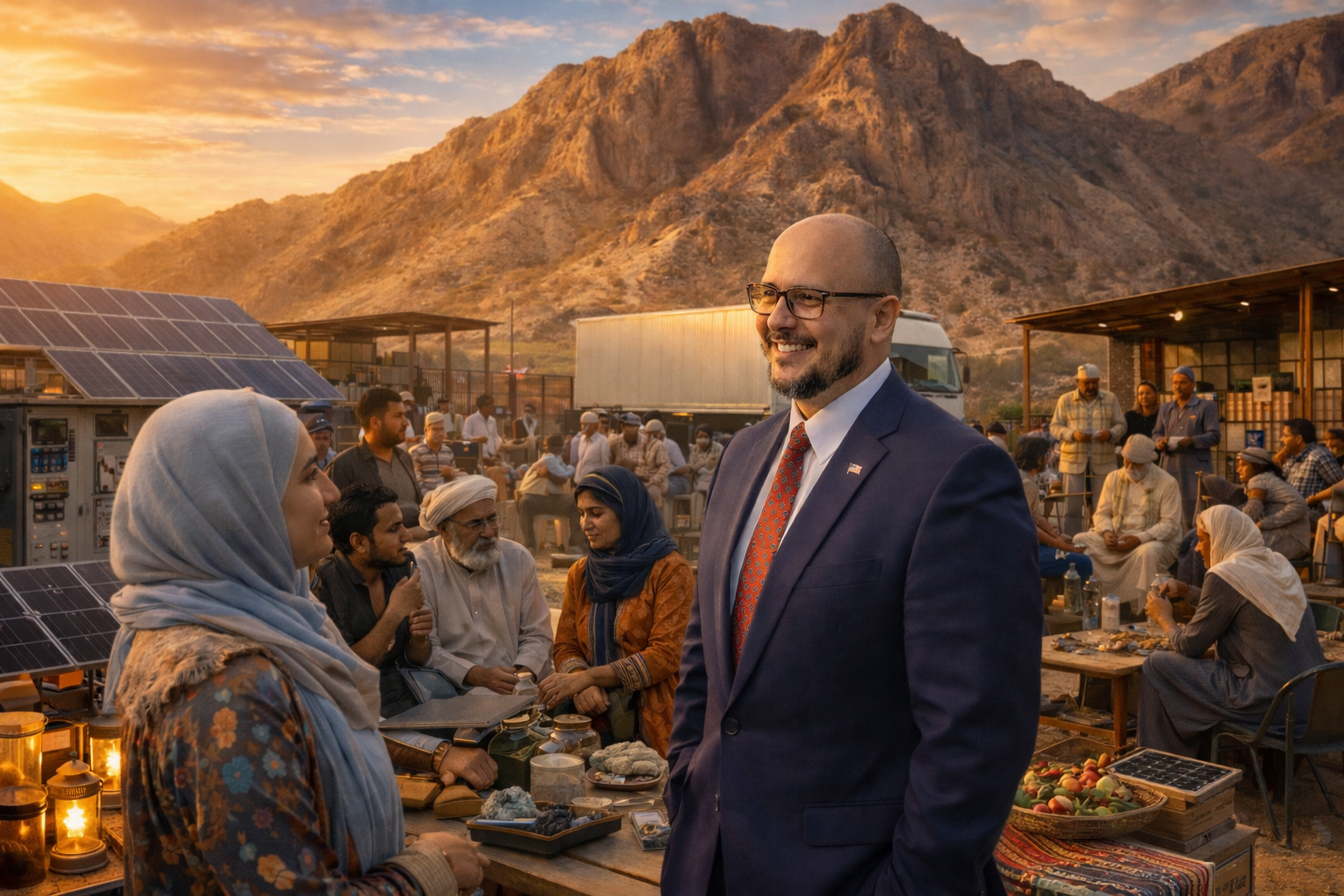
Balochistan’s future will be strongest when dignity, enterprise, trust, and partnership grow together.
I Have Never Believed Balochistan Should Be Defined by Fear
There are some places that the world speaks about too quickly and too coldly. Balochistan is one of them. Too often, the conversation begins with danger and ends there. Too often, people look at the province and see only distance, harsh terrain, insecurity, neglected communities, and difficult headlines. But that is not the whole truth. It was never the whole truth.
When I think about Balochistan, I do not first think of fear. I think of people. I think of young men and women with talent that has never been fully invested in. I think of communities with pride, memory, and resilience. I think of families who want the same things families everywhere want, which is dignity, livelihood, education, safety, and a fair chance. I think of a region that has been talked about strategically for years, but not embraced nearly enough in human terms.
And that is exactly where a new conversation must begin. Balochistan is not only a strategic region. It is a human region. It is a place where hope can be organized. It is a place where ethical investment can become a form of peacebuilding. It is a place where entrepreneurship can become a bridge between stability and dignity. It is a place where Pakistan and the United States can build something wiser together, something more practical, more inclusive, and more lasting than another round of temporary attention.
What People Miss When They Talk About Balochistan
The biggest mistake people make is assuming that Balochistan’s future depends on one thing. It does not. No province rises because of one project, one investor, one speech, one road, or one company. Regions rise when ecosystems begin to work. Regions rise when the classroom connects to the job site, when the job site connects to the local vendor, when the local vendor connects to formal procurement, when women are included in the economy, when young people see a future bigger than frustration, when communities are heard, when institutions cooperate, and when investors begin to believe that progress can actually hold.
That is the real opportunity in Balochistan. It is not only about minerals, logistics, trade routes, industrial development, or major infrastructure. It is about building the surrounding life system that allows all of those things to function honestly and sustainably. It is about making growth local enough to be felt, visible enough to be trusted, and practical enough to create jobs.
If we are serious, then we have to stop asking only what can be extracted from Balochistan and start asking what can be built in Balochistan. What can be trained there. What can be manufactured there. What can be repaired there. What can be grown there. What can be led there. What can be exported from there. What can be entrusted to its people.
That is when the conversation becomes powerful.
The Real Opportunity Is Not a Single Project. It Is a Living Economic Ecosystem
The future of Balochistan will not be secured by isolated islands of development. It will be shaped by connected ecosystems. That means enterprise hubs, local supply chains, vocational pathways, women-led businesses, diaspora investment channels, university partnerships, logistics systems, emergency readiness, digital services, community dialogue, and trusted cross-border collaboration.
Imagine a Balochistan where a young person can move from a village or neighborhood into a training center, from a training center into an apprenticeship, from an apprenticeship into a job, and from a job into launching a small enterprise of his or her own. Imagine a region where a woman who makes textiles, food products, digital services, school supplies, or home-based solar solutions is not treated as a marginal actor, but as a real economic contributor with access to markets, finance, branding, and mentorship. Imagine a place where local vendors are not permanently excluded from large opportunities because they lack formal procurement readiness, but are instead trained to meet standards and win contracts.
That is the kind of ecosystem that changes everything.
The strongest growth model for Balochistan would include local supplier development, contract readiness, business formalization, technical skills academies, women’s enterprise networks, export readiness coaching, industrial service businesses, renewable energy entrepreneurship, transport and warehousing services, maintenance and repair businesses, artisan to market programs, community-based digital work, agricultural value addition, and partnership platforms that allow Pakistani and American stakeholders to work together in ways that produce visible local benefit.
What We Can Actually Build, If We Choose to Think Bigger
One of the most exciting ideas is the creation of a Balochistan Enterprise and Investment Readiness Platform. This would not be a typical incubator with nice language and limited real effect. It would be a working platform designed to identify promising businesses, strengthen them, connect them to demand, and help them become investment and procurement ready. It could support ventures in transport, cold storage, industrial catering, solar installation, digital mapping, equipment maintenance, construction supplies, data services, communications, warehousing, local tourism, women-led handicrafts, mineral support services, and agribusiness processing. It could help founders with registration, accounting, compliance, branding, investor presentation, contract preparation, and customer acquisition.
Another powerful initiative would be a Supplier Development and Local Procurement Program. Many local communities are told that development is coming, but what they often experience is exclusion. Large projects arrive, but local businesses are not prepared to meet formal standards, so the money flows outward. That cycle must be broken. A serious supplier development program could help local firms learn invoicing, documentation, tax practices, tender writing, safety protocols, customer service, inventory systems, digital recordkeeping, insurance basics, and quality assurance. It could also create a verified local vendor directory so that larger institutions and companies have a practical reason to buy locally.
There is also room for a Balochistan Workforce to Enterprise Pathway. This would connect vocational training directly to the real economy. It would offer programs in welding, industrial electrical work, fabrication, solar installation, heavy equipment support, dispatch systems, warehouse operations, construction supervision, water systems maintenance, vehicle repair, English for industry, business communication, bookkeeping, digital literacy, entrepreneurship, and leadership. But most importantly, it would not stop at training. It would move people into apprenticeships, job placements, cooperative formation, and eventually enterprise ownership. The most successful graduates could receive toolkits, mentoring, and seed support to build their own small service businesses.
I also believe strongly in district-based enterprise hubs. Not abstract centers, but real places where local entrepreneurs, women’s groups, returning graduates, artisans, technicians, and youth innovators can meet mentors, attend workshops, use digital facilities, access legal and accounting guidance, and connect with markets. In a province as large and diverse as Balochistan, these hubs could become local engines of confidence. In some places they could focus on agribusiness and cold chain solutions. In other places they could focus on logistics, technical trades, or small manufacturing. In urban settings, they could support digital service startups, e-commerce, creative industries, research labs, and youth innovation challenges.
There is also a strong case for mobile enterprise labs and mobile training teams. Not every district will immediately have the same infrastructure, but opportunity should not wait for perfect buildings. Mobile teams can bring business coaching, technical instruction, digital tools, legal literacy, accounting support, and market readiness training directly to underserved communities. They can help close the gap between remote talent and formal opportunity.
Peace Is Not Only a Security Goal. It Is an Economic Design Choice
We have to be honest about something important. Serious investment does not flow into environments that feel abandoned, disconnected, or unpredictable. Investors ask practical questions. Can goods move safely. Can workers commute reliably. Can communications hold. Can emergencies be handled. Can institutions coordinate. Can communities be heard before tension becomes crisis. Can the local population see themselves in the future being built.
These are not only policy questions. They are development questions. They are entrepreneurial questions.
That is why one of the smartest things Balochistan can build is a culture of infrastructure resilience and business continuity. This creates opportunities for training centers, local first responder programs, industrial safety coaching, emergency medical response teams, route monitoring services, secure truck rest and service points, maintenance depots, incident reporting tools, resilience audits, and business continuity planning firms. These may not sound glamorous to outsiders, but in real economies these are exactly the systems that make growth believable.
There is powerful potential in modernizing training institutions so that they include dedicated infrastructure protection, emergency management, and industrial safety modules. There is room for incident command workshops that teach multi-agency coordination during crises, seminars that help engineers and planners think about security by design, tactical simulation tools adapted to local terrain, and executive leadership sessions that teach strategic planning and responsible resource allocation. There is room for data-driven approaches that help local institutions understand risk patterns, map vulnerabilities, and respond faster. There is room for better communications systems, digital reporting tools, and practical audit mechanisms that protect both people and assets.
At the community level, trust-building matters just as much. Community consultation forums, district listening sessions, village to market dialogues, police-community sports activities, youth civic leadership circles, public-private roundtables, and local grievance response channels all help turn tension into participation. When communities feel invisible, instability grows in silence. When communities feel heard, informed, and included, peace becomes more realistic.
Women Must Be at the Center of the Economic Story
No serious article about Balochistan’s future should talk only about male-dominated sectors and then claim to be speaking about development. Women are not a side note in the economy. They are one of its greatest under-recognized strengths.
A women-led enterprise strategy for Balochistan could transform households and districts at the same time. It could support food processing, tailoring and textiles, handicrafts, digital bookkeeping, school and learning services, community health distribution, e-commerce, embroidery brands, dried fruit packaging, beauty and wellness services, cooperative production, local tourism experiences, and solar-enabled home businesses. It could include micro grants, savings circles, digital payments literacy, branding workshops, packaging support, export coaching, and mentorship from women leaders in both Pakistan and the United States.
There is also a powerful opportunity to expand women’s professional roles in screening, administration, logistics coordination, facility management, communications, and community engagement. A more inclusive workforce is not only fairer. It is smarter. It builds trust, broadens household prosperity, and gives entire communities a larger stake in stability.
Young People Do Not Need Sympathy. They Need Pathways
I have seen too many places where young people are told to be patient while no real pathway is built for them. Balochistan cannot afford that mistake. Youth need movement. They need visibility. They need proof that effort leads somewhere.
This is why I would strongly support youth innovation labs, startup boot camps, paid apprenticeships, technical challenge competitions, district entrepreneurship clubs, digital freelancing academies, maker spaces, research-to-market fellowships, and leadership programs that bring together university students, vocational trainees, local founders, and diaspora mentors. Imagine a generation of young people in Balochistan learning how to repair solar systems, manage digital inventories, operate warehouse software, pitch business ideas, build local brands, support logistics services, analyze data, and start microenterprises that serve growing markets. That is not a dream. That is a design choice.
A Youth to Founder Fellowship could be especially powerful. It could identify high-potential young men and women from universities, technical institutes, and communities across the province, then give them mentoring, travel exposure, seed support, leadership training, and a pathway to launch real ventures. Some would go into agriculture and food systems. Some into logistics. Some into education technology. Some into digital services. Some into artisan markets. Some into repair, maintenance, or renewable energy. The point is not to produce one kind of entrepreneur. The point is to awaken many kinds of builders.
The Diaspora Can Become a Force for Confidence
There are many people from Balochistan and Pakistan living abroad who care deeply, but do not know where to start. They want to help, invest, mentor, support, sponsor, donate, or collaborate, but they need trusted channels. That is where an organized diaspora partnership can become transformative.
A Balochistan Diaspora Opportunity Network could connect overseas professionals, investors, alumni, philanthropists, engineers, academics, business owners, and community leaders with practical initiatives on the ground. They could fund scholarships, sponsor challenge prizes, mentor startups, open export contacts, donate equipment, help with branding, advise on business systems, and create market access for local products and services. A region changes when its people stop feeling scattered and start feeling connected to a common mission.
Diaspora engagement also matters psychologically. It tells local youth that the world has not forgotten them. It tells entrepreneurs that someone believes they can grow. It tells families that migration is not the only form of aspiration. Investment can come back, not only people leaving.
The Events That Could Change the Story
Good ideas need stages. They need places where people can meet, listen, discover, and believe. That is why Balochistan needs more than programs. It needs flagship gatherings that change the emotional climate around the region.
A Balochistan Innovation and Enterprise Forum could become one of the most important recurring platforms in the province. It could bring together entrepreneurs, educators, investors, women founders, chambers of commerce, industry stakeholders, social enterprises, local institutions, diaspora leaders, and development partners. It could showcase startup pitches, supplier success stories, university research, women-led ventures, artisan products, logistics innovations, renewable energy solutions, and district opportunity maps. It could include quiet side meetings where partnerships are actually formed, not just discussed.
A Balochistan Enterprise Week could travel across districts and create an entirely different kind of energy. Imagine business showcases, vocational demonstrations, youth pitch sessions, procurement fairs, artisan exhibitions, leadership dialogues, storytelling nights, agricultural value chain sessions, women’s enterprise circles, export readiness clinics, and investor breakfasts. Imagine districts feeling seen instead of peripheral. Imagine local people hearing a public language of possibility more often than a language of fear.
A Critical Minerals and Community Prosperity Symposium could also be valuable if framed properly. Not as a narrow technical event, but as a conversation about how strategic sectors can produce local jobs, training, supplier growth, environmental responsibility, and long-term trust. That kind of gathering could help reframe economic development around inclusion and shared benefit.
University to Community Partnership Labs would also make a difference. American and Pakistani universities can do much more than exchange papers and good wishes. They can co-design applied research, student fellowships, entrepreneurship curricula, technical solutions, rural innovation pilots, and market-based development models that directly serve districts and communities. Students can become problem solvers. Faculty can become mentors. Alumni can become connectors. Research can become livelihood.
Balochistan Can Build Strength Across Many Sectors at Once
The future of Balochistan should not be reduced to one sector. Real prosperity is layered.
There is clear promise in mining-adjacent and critical mineral support industries, especially where technical services, transport, maintenance, safety systems, logistics, catering, communications, documentation, and local procurement are concerned. But long-term value will come when those opportunities are rooted in local enterprise development rather than remaining enclosed within a few formal actors.
Renewable energy is another major frontier. Solar installation, battery systems, microgrids, water pumping, energy maintenance services, and off-grid enterprise solutions could support homes, clinics, schools, farms, workshops, and industrial sites. In a place where continuity matters, energy resilience becomes both a development need and a business opportunity.
Agribusiness remains deeply important. Cold storage, fruit processing, packaging, irrigation support, livestock services, dairy entrepreneurship, seed and input distribution, farm logistics, and digital market access can lift rural economies in ways that feel immediate and broad-based. Balochistan’s agricultural future deserves much more strategic attention than it often receives.
Logistics and transport are equally central. Every region with strategic geography eventually faces the same question, which is whether it will merely be passed through or whether it will build a local economy around movement. Balochistan can build that economy through warehousing, fleet services, dispatch systems, vehicle maintenance, roadside service hubs, packaging, cargo support, route communications, and commercial rest infrastructure.
Digital work is another frontier with enormous potential. Not every young person needs to wait for a large employer. Some can become freelancers, remote assistants, digital designers, data entry specialists, e-commerce managers, online educators, bookkeepers, and service providers if the right connectivity, training, mentorship, and work habits are built around them.
Tourism, heritage, and cultural enterprise should also be part of the long view. Once stability deepens and local ecosystems strengthen, Balochistan has room for heritage storytelling, eco-tourism, food experiences, artisan markets, local guiding, documentary arts, photography trails, and hospitality training. Regions become more investable when they become more narratable. People invest more easily in places they can imagine.
Good Partnerships Will Decide Whether Great Ideas Stay on Paper or Enter Real Life
No single organization can do this work alone. The right future for Balochistan will be built through coalitions that are humble enough to collaborate and serious enough to deliver. Universities, community organizations, philanthropies, social enterprises, chambers of commerce, technical institutes, private companies, local entrepreneurs, women’s networks, diaspora groups, and public institutions all have a role to play.
Universities can provide research, talent pipelines, incubation, exchange, and applied learning. Technical institutes can build workforce readiness. Civil society can bring local trust and community insight. Private companies can offer procurement opportunities, technology, mentoring, and market discipline. Diaspora networks can provide confidence, capital, and access. Philanthropies can support early-stage risk, pilot models, scholarships, challenge funds, and innovation platforms. Public institutions matter because no serious development can succeed without practical coordination, credibility, and facilitation.
The best partnership model is one in which local communities are not treated as recipients. They are treated as co-builders. That is the difference between temporary programming and lasting transformation.
Why the United States and Pakistan Should Believe in Balochistan Together
For Pakistan, Balochistan matters because its prosperity is tied to national confidence, economic balance, regional connectivity, and inclusive growth. No country becomes fully strong while one of its most strategically important regions remains underdeveloped, undertrusted, and underconnected.
For the United States, Balochistan matters because real partnership is built where stability, opportunity, trusted institutions, and shared economic interests come together. Long-term collaboration makes more sense when it supports practical growth, ethical investment, workforce development, resilient infrastructure, and local opportunity.
For local communities, the answer is even simpler. They should be included because it is their home. Their future should not be an afterthought in plans made about them. It should be central to plans built with them.
This is why investment in Balochistan should be understood as more than finance. It is belief. It is relationship. It is strategic patience. It is the decision to see value where others saw only difficulty. It is the decision to help build a future rather than merely comment on what is missing.
What Success Would Actually Feel Like
Success would look like a young woman in Quetta launching a packaging and digital sales business that employs others. It would look like a trainee in a vocational center becoming a solar technician, then a contractor, then a business owner. It would look like a village artisan finding a market beyond her district. It would look like a local firm finally winning a formal contract because someone took the time to prepare it properly. It would look like communities meeting partners with less suspicion and more confidence. It would look like universities becoming engines of local problem solving. It would look like roads and facilities being not only better built, but better trusted. It would look like families feeling that progress is no longer happening somewhere else.
Most of all, success would feel like a change in emotional climate. Less resignation. Less distance. Less fear. More ownership. More seriousness. More imagination. More movement.
That is the Balochistan story worth writing.
A Closing Invitation
I do not believe Balochistan needs more shallow admiration or occasional concern. It needs commitment. It needs thoughtful builders. It needs investors with conscience. It needs institutions with patience. It needs partnerships that respect local people and aim for real outcomes. It needs projects that are practical enough to work and bold enough to matter.
If we approach Balochistan with dignity, honesty, and imagination, it can become one of the most important examples of how entrepreneurship, community trust, workforce development, infrastructure resilience, women’s economic inclusion, youth leadership, and U.S.-Pakistan partnership can reinforce one another.
Balochistan does not need to be saved by outsiders. It needs to be believed in, built with, and invested in ethically. Its people have the strength. The region has the significance. What is needed now is a more human vision and the courage to act on it.
For organizations, institutions, companies, philanthropies, and development partners looking to create meaningful and measurable impact in Pakistan and beyond, Feel Worldwide Foundation Inc., a U.S.-registered 501(c)(3) nonprofit, is a uniquely strong partner because we combine mission, credibility, and access. Through our deep relationships across the United States and Pakistan, including connections with universities, nonprofit organizations, community leaders, entrepreneurs, alumni networks, industry stakeholders, and public-sector institutions, we are able to convene the right people, design practical programs, and turn ideas into real outcomes in entrepreneurship, education, leadership, livelihoods, humanitarian support, and community development. What makes us especially valuable as a partner is not only our cross-sector reach, but our ability to work with cultural intelligence, strategic clarity, and a genuine commitment to long-term impact, making Feel Worldwide Foundation Inc. an ideal platform for those who want trusted, capable, and well-connected partners to build ethical, effective, and scalable collaborations in both the USA and Pakistan.