
Humanitarian Relief, Food Security & Stabilization
Protecting Dignity in Hard Times. Preserving Opportunity for What Comes Next.
Our humanitarian and stabilization programs help individuals, families, and communities remain safe, supported, and connected to the pathways that lead from crisis to resilience.
Why This Work Matters
Humanitarian support matters because people cannot build stable futures while urgent harm is still disrupting daily life. A child cannot focus on learning if food is uncertain. A family cannot plan for the future while facing sudden financial shock, unstable housing, or displacement. A community cannot recover well from crisis without preparedness, trust, coordination, and practical support. Feel Worldwide Foundation’s humanitarian pillar is built on that real-world understanding. It treats urgent support not as an isolated act of charity, but as a practical and strategic part of long-term progress.
This work is also designed as a connected system. Food support, emergency cash assistance, essential goods, housing stabilization, family support, and crisis response are not treated as separate silos. Together, they form a stabilization ecosystem that helps households manage hardship while protecting dignity and preserving forward momentum.
Accountable reporting
Results should identify the reporting period, location, evidence and FWF’s role. Direct delivery, partner contributions and future plans need to be distinguished so supporters can understand what a figure represents.
Read about trust and transparency or ask about the evidence behind a specific activity. Program concepts and intended outcomes are not reported as completed impact.
What This Pillar Includes
The eight streams below preserve our humanitarian portfolio. Each is presented as a program concept open to inquiry and partner development; current delivery, geography, eligibility, funding and a responsible program owner must be confirmed separately.
1. Humanitarian and Barrier-Reduction Support
A proposed flexible support bridge to reduce urgent barriers to safety, dignity, learning and recovery during hardship.
2. Emergency Response Program
A proposed approach to coordinated relief, access, logistics, referrals and early recovery following a crisis. This page is not an emergency-response or dispatch service.
3. Disaster Management Program
A concept for preparedness, risk reduction, resilience planning and recovery coordination with capable local partners.
4. Global Food Bank Initiative / Free Food Bank
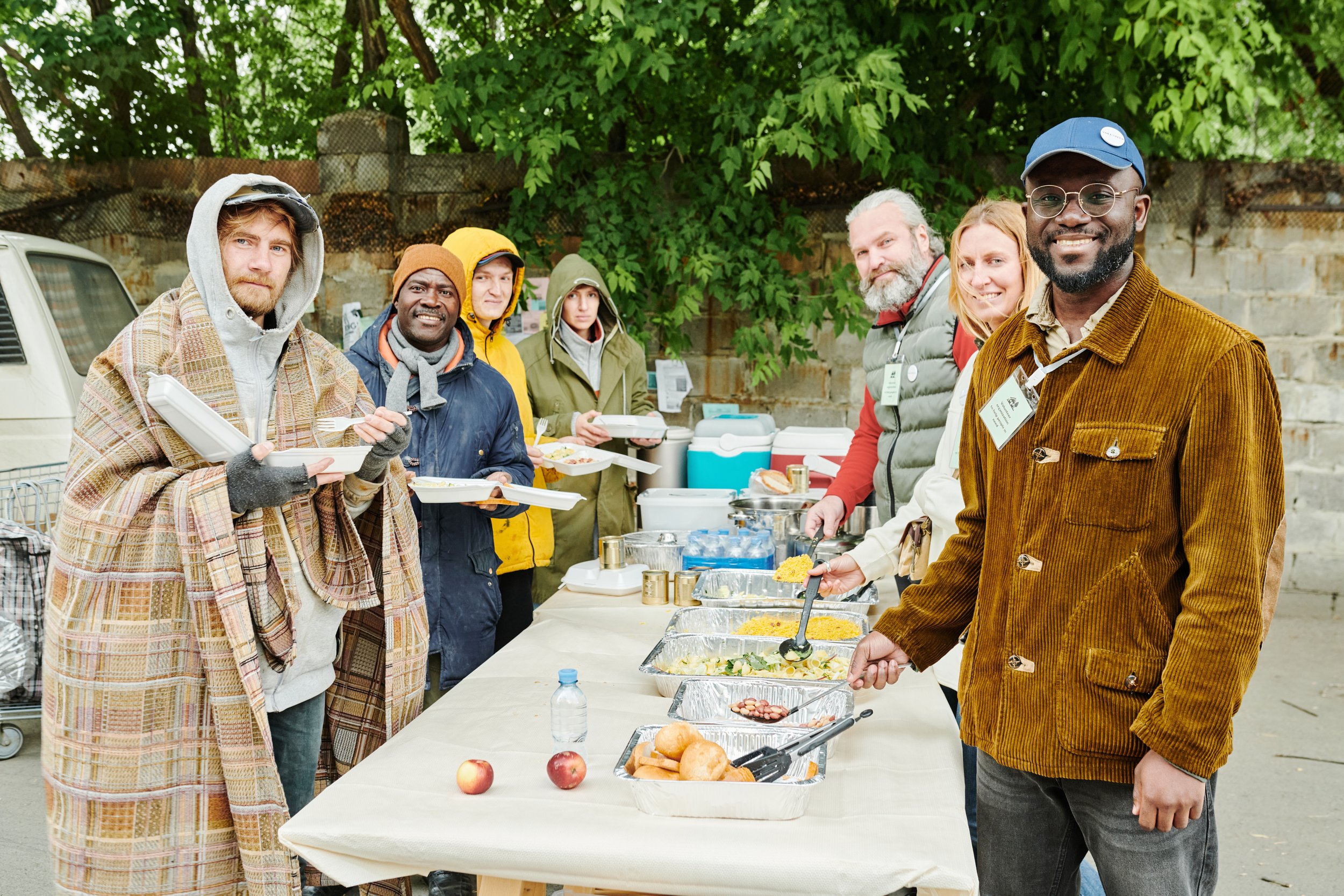
A concept for accessible, culturally suitable food support and connections to wider resources. No distribution site, delivery area, food supply or opening hours are confirmed here.
5. Emergency Cash Assistance Program
A concept for help with urgent essential expenses subject to an approved, funded intake and eligibility review. No cash award or open fund is promised. Read assistance information.
6. Donation Collection and Essential Goods Network
A proposed coordinated route for clothing, books, household goods and suitable essentials. Submit an offer for reviewbefore delivery; an offer does not establish acceptance, pickup or distribution capacity.
7. Affordable Living Solutions
A concept for housing stability through resource navigation, coaching and possible rent or utility support where separately approved and available. No housing inventory or payment is guaranteed.
8. Refugee and Family Support Services
A concept for family-centered stabilization, educational advocacy, service navigation and continuity during transition. Qualified providers and suitable safeguards are needed for specialist services.
Ask about any named stream and your general location, or propose a capable delivery partnership. Please keep sensitive records out of your first inquiry.
How the Programs Work Together
The strength of this pillar is not only in each program on its own, but in how the programs connect.
A family may first need food, cash assistance, essential goods, or emergency support. That same family may also need housing stabilization, family-centered service navigation, or continuity of care after displacement or crisis. A community facing disaster may need immediate relief today and preparedness systems for tomorrow. By linking these programs together, Feel Worldwide Foundation helps people move from urgent need toward greater safety, continuity, resilience, and participation.
This is one of the defining strengths of the foundation’s humanitarian approach. We do not stop at relief alone. We use relief, stabilization, and practical support to help protect the conditions people need in order to keep learning, recovering, rebuilding, and moving forward.
Program Highlights
These proposed components connect the eight portfolio streams above with practical contribution routes. They welcome inquiries and partner development; none is presented as a confirmed service or open distribution program.
Household Fresh Start
A proposed needs-led approach to suitable clothing, household essentials, furniture and learning materials for people rebuilding stability. Item suitability, recipient need, safe handling and delivery must be agreed before acceptance.
Partner-Led Food Access
A proposed collaboration with capable food-service and community partners. Food safety, culturally suitable supplies, storage, eligibility and distribution responsibilities need confirmation for each arrangement.
Emergency Readiness
A proposed focus on preparedness education, continuity planning, local coordination and suitable supplies. Response, referral and specialist responsibilities must be agreed with qualified partners before an activity proceeds.
Giving & Resource Network
A proposed way to connect documented needs with useful goods, qualified skills, transport and flexible funding. Offer goods, offer expertise, or propose a delivery partnership. Please wait for review before collecting or shipping items.
Help make this work possible.
Support a defined need, offer suitable resources, share qualified expertise or explore an institutional partnership. Your contribution may help with materials, preparation, accessible participation, delivery or the people and systems that make the work possible.
Availability varies by program and location. Contact us before making arrangements or commitments on FWF’s behalf. Explore current needs · Register volunteer interest · Ask a question.
What Success Looks Like
Success in this pillar is not defined by activity alone. It is defined by whether support reaches people in ways that reduce harm, strengthen dignity, preserve continuity, and create a stronger bridge toward longer-term resilience. Across these programs, success looks like:
vulnerable individuals and families receiving timely support before crisis deepens
households maintaining safer access to food, housing, essential goods, and critical care
communities becoming better prepared for disruption and better supported during recovery
displaced and high-need families staying connected to services, learning, and stability
donors and partners seeing practical, accountable, human-centered use of support
relief and stabilization helping protect the pathway to future opportunity.
Who This Work Serves
This pillar serves individuals, families, and communities facing hardship, instability, or heightened vulnerability. Across the broader humanitarian profile, this includes children and youth, adults, caregivers, parents, widows and widowers, economically disadvantaged people, immigrants and migrants, people living in rural and urban areas, people with disabilities, victims of violence or disasters, displaced families, and others whose progress is being disrupted by crisis or lack of access. The programs are designed to meet people where they are, without losing sight of where they hope to go.
For Donors, Partners, and Supporters
This pillar offers one of the clearest ways to understand Feel Worldwide Foundation’s values in action. It is immediate, practical, and deeply human. It shows how the foundation responds when safety, dignity, and continuity are under pressure, while still keeping long-term resilience and opportunity in view. For donors, it is a compelling area of support because the need is clear and the impact is tangible. For institutional partners, it demonstrates a serious approach to humanitarian support, household stability, family well-being, resilience, and accountable delivery. For volunteers and civic collaborators, it offers meaningful ways to turn compassion into organized, practical action.
A Humanitarian Approach Grounded in Dignity
Our humanitarian work is shaped by the same values that guide the foundation as a whole: dignity, inclusion, partnership, accountability, and practical impact. We believe support should not weaken people. It should help them breathe, stabilize, recover, and move forward. That is why this pillar is not only about crisis response. It is about protecting people’s connection to learning, family stability, belonging, and opportunity, even in difficult times.
Call to Action
When urgent barriers are reduced, possibility becomes easier to protect. If you want to support families, strengthen communities, and help people move from hardship toward resilience, this is one of the most meaningful places to begin.
Support practical stability.
Useful essentials, suitable food, delivery support and flexible funding can help address documented needs. Tell us what you can contribute, or ask about currently available assistance and referrals. Services depend on location, eligibility and confirmed capacity.
Offer Essentials · Support a Current Need · Assistance Information
Applications for program participation are accepted throughout the year. Apply for program participation and name the activity that interests you. Request dates at least 90 calendar days ahead. Admission, available places, dates and delivery arrangements are confirmed separately after review. No payment is due with an initial application.
To ask about immediate assistance or a referral, use the contact route; the program-participation application is not an emergency or assistance-award request. Please do not send sensitive personal records in an initial inquiry.
The named streams on this page describe program concepts and intended approaches. They do not establish an open cash-assistance fund, food distribution site, warehouse, housing supply or worldwide service. Ask about a named activity and your general location before making plans.
At Feel Worldwide Foundation Inc., humanitarian support connects with empowerment. Our aim is to reduce urgent pressure, strengthen dignity and protect the conditions people need to learn, recover and rebuild. Any delivery arrangement needs a responsible owner, confirmed resources, appropriate safeguards and clear eligibility before it opens.